HONESTLY ASSESSING YOUR BUSINESS, your interests and your workload regularly can lead to dramatic changes, successful independent jewelers find.
Many retailers are figuring out that how they define success today may look quite a bit different than it did even a few years ago. The resulting soul-searching can lead to an exciting reinvention.
What’s driving change? Maybe the next generation has new ideas. Maybe you just ran out of room. Often, hardworking entrepreneurs want to work smarter and avoid burnout. Maybe it’s time to pursue a long-cherished interest or a creative outlet that has been lying dormant.
Reimagining a business or a career is about honestly looking at what you’re good at, what will work best for you and your market, and turning your attention to a new future.
Here we’re profiling seven jewelers who decided it was time for a change, for a variety of reasons as distinctly different as they are, from a distaste for outdated carpeting and a renewed focus on custom design technology to the opening of a destination dream store.
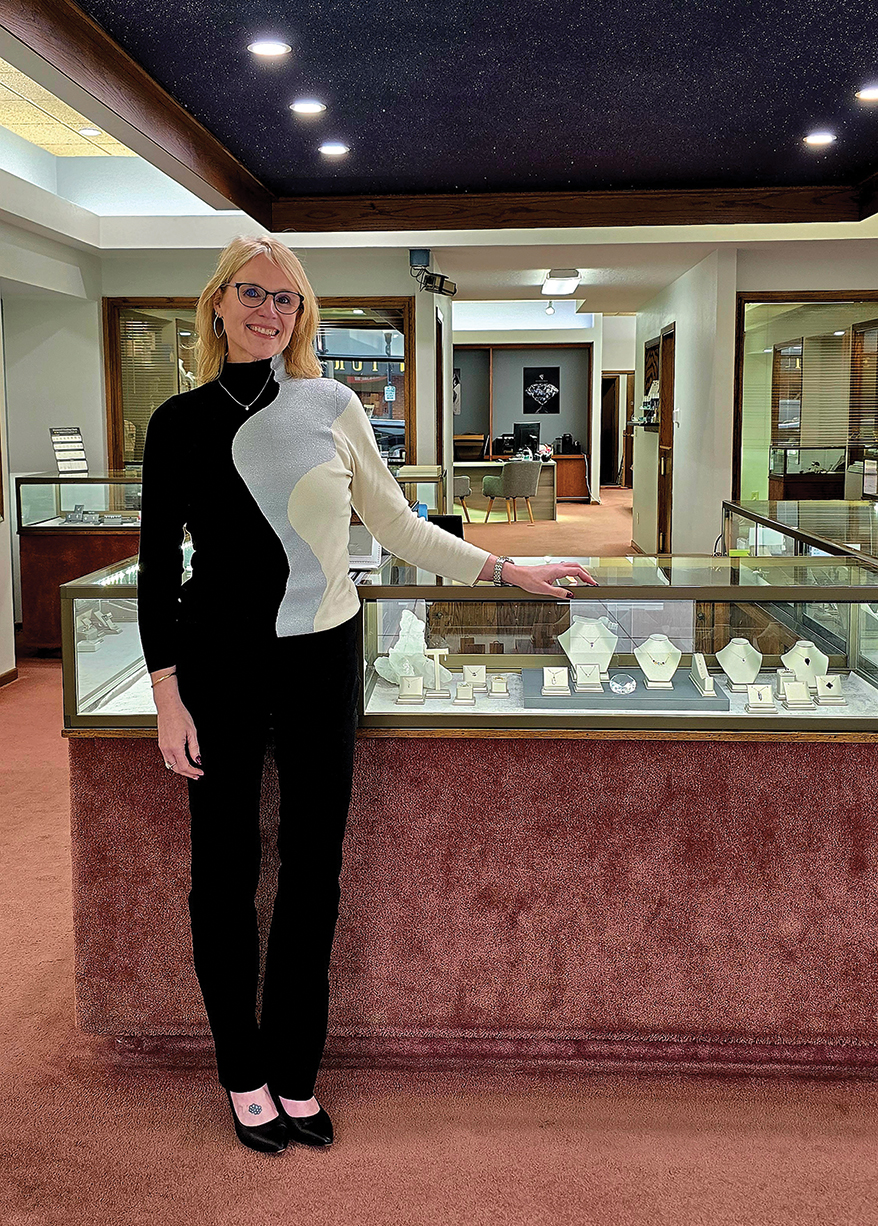
Erika Godfrey, owner of Hawthorne Jewelry, standing on the pink carpet that wound up inspiring a comprehensive store remodel.
Carpeting Eradication Drives a Full Renovation
Hawthorne Jewelry, Kearney, NE
A growing resolve to replace faded pink carpeting led third-generation owner Erika Godfrey to draw up plans to renovate and add to the building that houses her nearly 150-year-old family business.
Hawthorne Jewelry was founded in 1878, making it the oldest business of any kind still operating in Kearney, NE.
When Godfrey’s father, Aub Kendle, died four years ago, she was left with some life insurance proceeds and an abiding distaste for the carpeting that he had installed around 1982.
But when she started considering that relatively simple plan, she realized she’d also love to have a large upstairs office with some precious privacy. And since that would require an upstairs addition, why not add luxury showroom space, too? A building contractor suggested granite or marble trim to jazz up the century-old façade. Why not?
The upshot of all that musing is that permits were pulled and construction was scheduled to begin on Nov. 1. The plans had morphed all the way from new carpeting to a gut job.
For Godfrey, the reinvention of her brick-and-mortar store means more than just an aesthetic boost. It’s an affirmation of her decision to carry the torch of the family business in downtown Kearney and a commitment to the business’s future, whether it stays in her family or not.
She’d thought in the past she might relocate the store, but she feels strongly now that downtown is where it’s meant to stay. “I don’t know what made somebody come here and plop down a jewelry store,” she says. “We were on a dust road while Wild Bill Hickok” was traversing that road on a horse. But since they did settle there, those roots run deep.
“I ask myself, how do I move us forward so we’ll still be strong in another century and, even more, pay homage to those who got us this far (my parents and grandparents and the generations before them that were part of this store), all while moving out the old to become clean, fresh and new?”
Advertisement
When Godfrey was growing up, she resolved to leave small-town Nebraska far behind her for a job in international finance, perhaps — but as a young newlywed, she made it as far as Omaha, NE, for a bank job. When her dad called her out of the blue to say he was selling the family business, she still vividly recalls answering that call on a corded landline.
She was surprised by her reaction. “I said, ‘Great,’ hung up the phone and immediately called him back and said, ‘I don’t think we can let go of this. It feels like a member of the family.’”
So, she returned to Kearney and took over the store. “My dad handed me the keys and said, ‘Make the best choices you can.’”
It took a while to find her footing. Initially, she had to ask her dad to help her pay the electric bill. However, she also realized jewelry was in her blood.
Along with the renovation, she’s rebranding with an emphasis on ensuring bridal sales are an experience. “We’re smack dab in the middle of the country. How do we expand into the state, into Kansas? We can offer large diamonds, higher quality of service, custom and bench work. We have a unique opportunity to speak well for longevity, for integrity.”
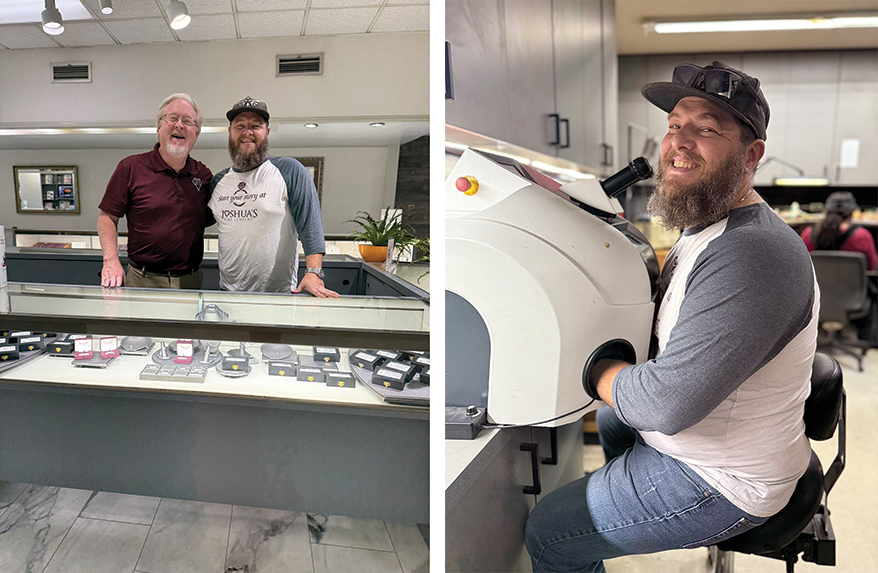
Chris and Nathan George in their store, Joshua’s Fine Jewelry. Nathan has transitioned the operation from catalog-based to custom-based.
Better Communication and Technology Drives Growth
Joshua’s Fine Jewelry, Russelville, AR
Most jewelry shoppers in Russelville, AR, looking for custom design visit Joshua’s Fine Jewelry downtown. Reinventing Joshua’s with a focus on what can be designed and made in house has brought the family business full circle to its roots.
Founded by Nathan George’s father, Chris, in a strip center in 1994, the business’s bread and butter was repairs, special orders and, on occasion, diamonds. In 2003, they moved into the 2,000 square-foot downtown location of a century-old jewelry store and later bought that building.
Nathan recognized as he assumed more responsibility that a custom design focus and improved communication with customers should be his goal. To that end, he began purchasing the equipment and technology he’d need.
Although the business was moving toward implementing technology-based computer systems, COVID made virtual appointments more urgent and sped up that aspect of modernization. CounterSketch and CAD have changed the custom design process itself. A staff designer works by appointment, then follows up with photos and texts.
“We went from catalog order to custom,” Nathan says. “We have old catalogs where my dad drew stones into the rings. Now we use CounterSketch.”
Adding a CNC machine — a computer-controlled machine that uses a high-powered laser beam to cut, mark, or engrave materials — has been a revelation. It means Nathan, his father and the team can make virtually anything to order. Rather than trying to advertise “We can make anything!”, Nathan says, the best way to convey that message is word of mouth. “They’ll share their custom engagement ring on Facebook, and their jealous friend will ask how we did it.”
As customization has increased, they’ve bought less inventory. They replace fast sellers and reinforce merchandise for the holidays, but they’re not trying to keep everything in stock. Changing times have also brought lab-grown diamonds, which have been a boost to business.
Nathan, though proficient in the shop, most enjoys the entrepreneurial side of the business. He sees the equipment and technology as an important means to an end. “The part of it I like is making the customer come back. I want them to have a great experience.”
Building up the shop in personnel and technology reflects the origins of the business as a jewelry repair shop. Although Chris is a gifted salesperson, he was a jeweler first, and works part time now, splitting that time between shop and customers. “Dad is not opposed to technology,” Nathan says. “He understands that some things are changing.”
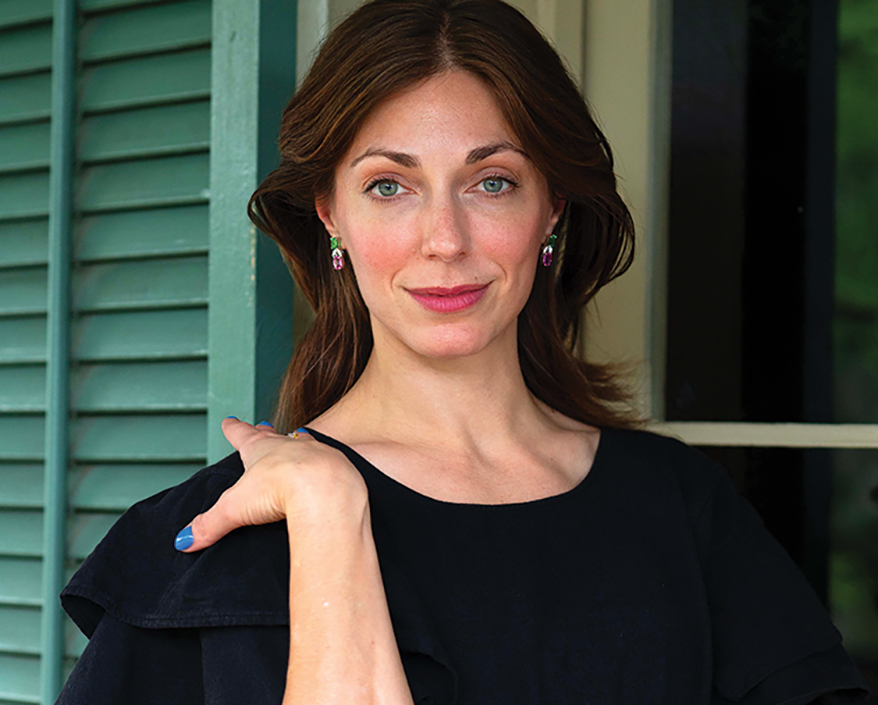
Rebecca Rau
Career Change Driven by Creative Inclination
Rebecca Rau Jewels and M.S. Rau Jewelry Gallery
After Rebecca Rau, fourth-generation antiques dealer at M.S. Rau in New Orleans, took some time off in 2023 for soul searching, she realized that design work had been the most exciting and fulfilling part of her job in recent years. Rau had managed the expansion and detailed renovation of the M.S. Rau Jewelry Gallery, for example, in 2021.
Being on the jewelry sourcing team, she occasionally designed settings for loose gemstones. She’d also worked for a year at M.S. Rau as the gallery designer and merchandiser. She had tested the concept of turning antiquities into jewelry a couple of times, just for fun.
As a result of that realization, Rau relocated from New Orleans to New York City and began designing her own jewelry.
Prior to that, she had worked full time as vice president of acquisitions for M.S. Rau, her family’s company known for its world-class art collection, rare antiques and spectacular jewelry.
After earning her master’s degree from Sotheby’s Institute of Art in London, Rau traveled Europe and Asia, acquiring rare jewels and objets d’art for M.S. Rau while cultivating her curatorial expertise. She continues to source acquisitions for M.S. Rau, but her primary focus has shifted.
“New York certainly isn’t the most relaxing environment to pursue new ventures, but its pulse is palpable, and I love being at the center of our industry and exposed to so many people of influence rather than watching them from afar,” she says.
A collection of one-of-a-kind pieces, “Then & Now,” fuses antiquities with gemstones, creating modern amulets that celebrate millennia of craftsmanship. The result is both refined and playful. She also has designed a more traditional collection featuring showstopping gems. “It’s been rewarding to exercise my design abilities in both conventional and unconventional ways,” she says.
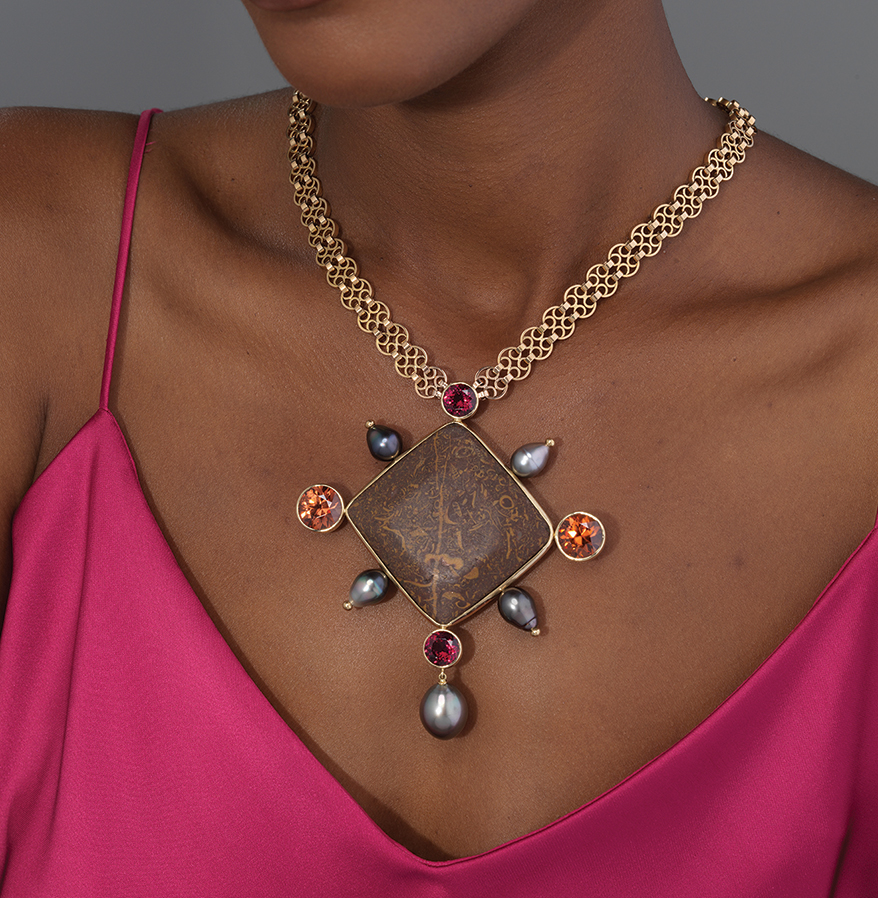
Rebecca Rau’s collection of one-of-a-kind pieces, Then & Now, fuses antiquities with gemstones.
An October preview at M.S. Rau in New Orleans was followed in early November by a launch during New York City’s Jewelry Week.
There have been challenges along the way. She has felt vulnerable pursuing something that’s aesthetically experimental in an environment driven by the demands of profit. “Not to mention the fact that the wholesale and production side of the business can be a bit machismo,” she says. “It takes a bit of brazenness to gain respect as a woman in this very traditional world! In spite of this, it’s a challenge I enjoy taking on.”
From page 32 Rau says that the most humbling aspect of her career shift has been pursuing it solo, taking on every needed administrative and clerical task. “It’s important to me to start lean and build the brand and business carefully and intentionally,” she says. She’s grateful for her connections in the business who have offered advice and introduced her to jewelers.
Although her jewelry designs reflect her career reinvention, the pieces themselves have been reinvented.
Each one demonstrates how the craftsmanship of another age can inform a modern artist and become something new. “It’s a nod to innovative metalsmithing techniques that extend further back into history than most people appreciate,” she says.
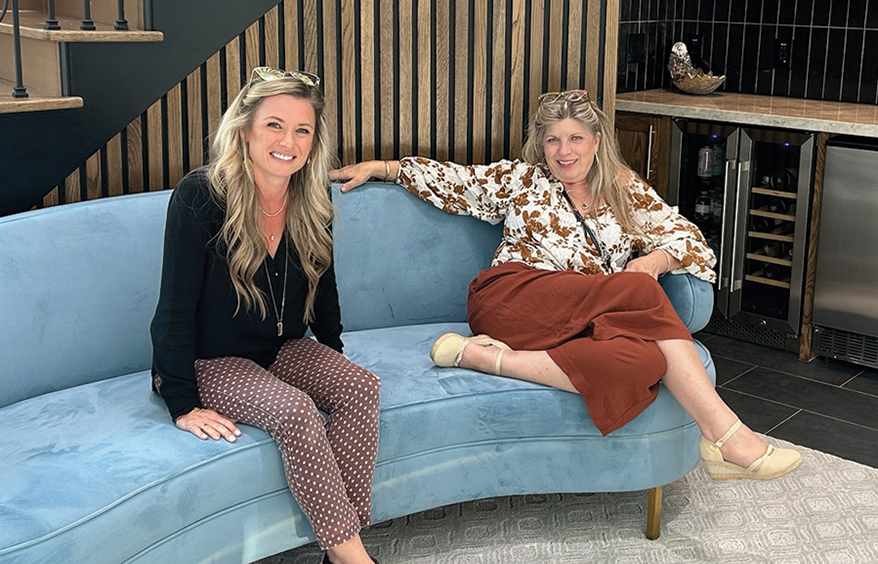
Amber Gustafson and her daughter, Melissa Nelson, now operate out of a 5,200 square-foot space owned by Gustafson.
Lifelong Dream Culminates in Destination Space
Amber’s Jewelry, Katy, TX
In 2011, jewelry designer and bench jeweler Amber Gustafson undertook a major expansion of her store, marking the third time she’d expanded further into the first floor of a bank building in Katy, TX. In many ways it was a DIY project, with a budget that topped out at $35,000. But after that expansion, she’d officially run out of space.
After years of planning and saving, in September 2025, Gustafson opened her dream 5,200 square-foot freestanding location next door to the bank. This time, she spared no expense and hardly blinked when her daughter, Melissa Nelson, told her she needed an elevator — an additional unexpected expense in the building project. Nelson, a graduate gemologist, had joined her mom in the business three years ago after working 17 years in sales at Zadok Jewelers of Houston. Nelson’s renewed interest in the business was one motivation for Gustafson’s building project.
But there were others: the need for more space, of course, and the allure of ownership were high on the list. “I have the freedom to not worry about what my landlord is going to do, what I can and can’t do in the parking lot or the store,” Gustafson says.
She broke ground in August 2024 on the building, which boasts a large showroom and a glass-enclosed space on the first floor showcasing jewelers at work. The second floor has space for more jewelers and offices. “I even bought myself a new bench,” she says.
Gustafson landed her first job in the industry at age 18 working in the office of a mall jewelry store. At 19, she carved her first custom wax of a ring that was cast into gold and set with a diamond; it sold! She opened her own business in 2001.
“Reinventing yourself, there’s a lot to it: going from a bench jeweler to a custom designer to having five bench jewelers and a full staff in a new building. But I’ll never forget where we started from.”

The reinvention came with a new name: Amber’s Designs Fine Jewelry will be known simply as Amber’s Jewelers. She’s also adding new lines, including Charriol and A. Jaffe. The shop is outfitted with new equipment, including a laser machine, engraving machines and microscopes. She had the store fitted with wiring for display screens, allowing customers to watch jewelers engraving, setting beads or designing with CAD.
An architect customer designed the building based on Gustafson’s hand-drawn sketch. Even with this showplace of a store, there are DIY elements. Because of the proximity of new location to old, for example, Gustafson didn’t hire movers; the team picked up and carried boxes as time allowed. “We took our safes, rolled them through the parking lot and rolled them into the new store,” she says.
Gustafson is proud of how comfortable her place is, including the bar flanked by a plush couch. Adding to the experience is a robust sound system and an appealing air-freshener scent. “I keep pinching myself,” she says. “I have been a miser, but when I did this, I decided to spare no expense.”
Shrinking a Family Business Buys Some Free Time
Krombholz Vintage Jewelry, Cincinnati, OH
When Lee Krombholz began contemplating pulling back a bit from his jewelry retail business (working perhaps 40 hours a week instead of 80), he consulted his family. His daughter Izzie Krombholz, Lee’s designated successor in the jewelry business, has long had a passion for vintage jewelry. Lee, with experience and expertise in vintage and antique jewelry himself, agreed that was the direction to go, even though it involved a good bit of downsizing and giving up custom design, another of his passions.
“It’s equally as challenging to shrink a business as it is to grow a business,” Lee says. “But I love the idea of working less.”
He stopped custom design and stopped purchasing new inventory. Staff was limited to family. “The only custom I do now is repurposing antiques that are too worn to wear,” he says.

The Krombholz family, which formerly owned a traditional retail store, now focuses on vintage jewelry and needlepoint.
While the jewelry enterprise has contracted, the Krombholz family business has expanded in a different direction. Lee’s wife Heather and their older daughter, Kirtley, launched a needlepoint business inside the jewelry store during the 2020 pandemic shutdowns. It has since grown significantly. In addition to selling supplies, they offer classes for beginners and the finishing involved to transform a semi-finished piece into a one-of-a-kind pillow, purse or wall hanging.
Needlepoint is not an inexpensive hobby, Lee notes, and has been a good crossover business to complement the jewelry. “Her needlepoint store is truly a craft community,” Lee says of Heather. Kirtley, too, has found a niche in needlepoint that speaks to her, not having caught the jewelry bug as her sister did.
In October, both businesses were preparing to move from their 3,000-square-foot standalone building, which Lee had sold, into a leased converted firehouse, built in 1924. While walk-ins will be able to access the needlepoint side during regular hours, the jewelry store will be open by appointment only and online (about three-quarters of sales are made online now). “By being appointment-only in an upstairs location, we will be able to control the business,” Lee says.
Rethinking a Reinvention Breathes New Life into Store
K. Hollis Jewelers, Batavia, IL
When Karen and Rob Hollis bought a building for their jewelry business in 2021, it turned out to be more than they had bargained for. The former restaurant sprawled over 10,000 square feet. But it was in an ideal spot in Batavia, IL, right across the street from the old space they had rented for years. It was everything they wanted: light, bright, familiar and at a busy intersection.
While they could have partitioned the space and rented out part of it, that plan, which would have required extra bathrooms, firewalls and separate utilities, would have been more expensive than simply finishing the whole thing and spreading out. Their wine bar at the old store had proven successful, so they expanded that feature at the new place. Even so, they were left with 3,000 vacant square feet.
Karen’s love of fashion led them to add a clothing boutique area. K Hollis Jewelers, Boutique & Wine Bar was born in September 2022.
Although the couple were optimistic, challenges soon emerged.
“At the end of each season, we always had a lot of leftover clothes,” Karen says. “We were marking things down with each seasonal change.”
So, in the fall of 2025, they decided to reinvent the business again. They would walk away from apparel, rent out about 3,000 square feet to a complementary business, and refocus on jewelry.
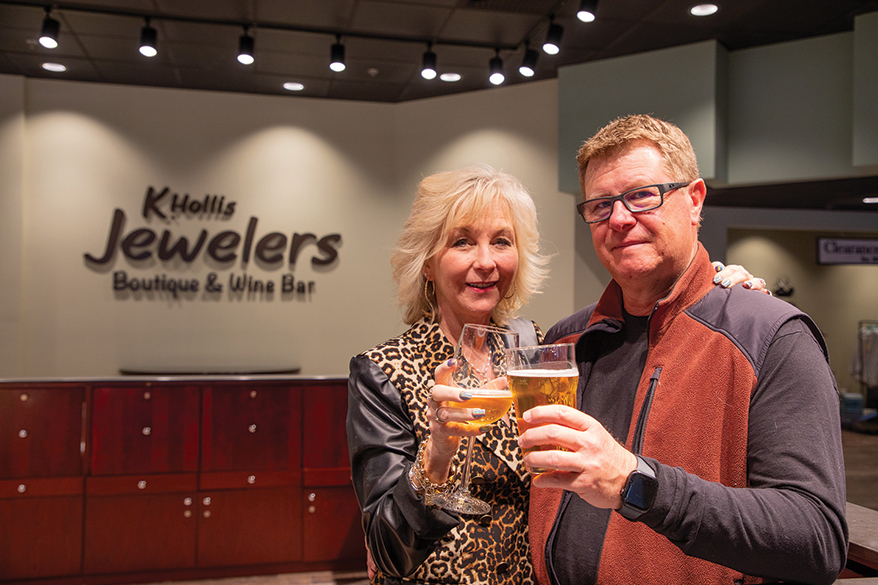
Karen Hollis and her husband Rob scrapped an apparel area to refocus on jewelry
“What we found was competition is heavy with online, especially for anybody under the age of 50,” says Rob. “We had a good clientele who shopped the boutique, but it didn’t translate into a profitable business.”
Rob had also feared that operating two businesses in the same location would detract from their focus on jewelry — and it did. “Karen was a buyer for both clothing and jewelry, and it is literally running two different businesses. She was having a blast and it was difficult for her to walk away. But we’re both on the same page that it’s the right thing to do.”
Moving forward, they’re introducing more jewelry lines while prioritizing engagement, bridal and custom, and cultivating an estate section. “We’re trying to be better at what we think we’re good at,” Rob says.
Advertisement
Love of Interiors Leads to a Second Business
Gem Jewelry Boutique, Oak Park, IL
In the 1990s, Laura Kitsos lived in Portland, OR, where she worked for a high-end furniture store. To occupy herself during slow times, she made beaded necklaces, a hobby that evolved into a jewelry design side hustle and, by 2004, her own jewelry store in Oak Park, IL.
The focus since the beginning has been on craftsmanship and ingenuity in her curation of jewelry. “I am obsessed with sharing small, hard-to-find designers and traveling extensively in order to meet with or simply become inspired by these artists,” she says.
Three years ago, Kitsos opened a second store, Gem Home, focusing on vintage home goods, gifts and art, right next to her jewelry store, Gem Jewelry Boutique.
Interior design was her first love, and so it was fun at first to give the second store a try. But it was an experiment she quickly began to rethink.
“Paying two rents and utilities and sets of employees was insane,” she says. “To have two spaces in the same block, I don’t know what I was thinking.”
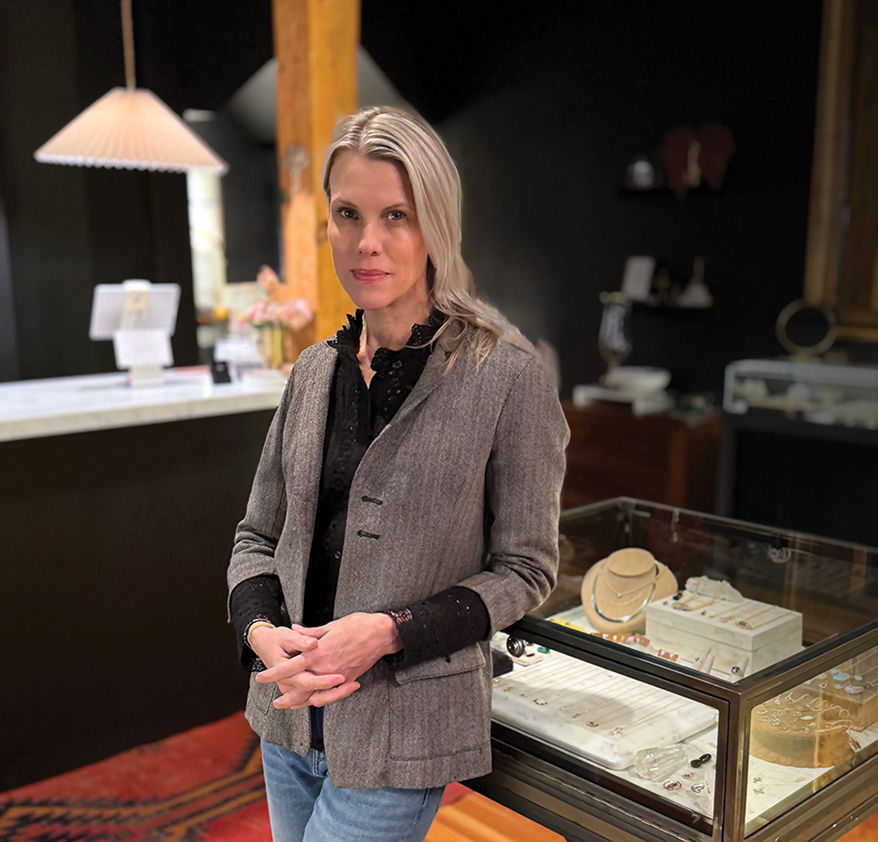
Laura Kitsos opened a second business focused on vintage home goods, gifts and art.
After a year of that arrangement, she relocated and combined both enterprises into a more tucked-away location on a scenic cobblestone alley with European-style charm. Combining the two meant she could slash expenses significantly. Eighty percent of sales come from jewelry, and more and more of those sales are made online.
“I am toying with the idea of creating different pop-up themes on the home side, so the in-store experience is always changing,” she says. “We might do clothing for six months, then maybe rugs. We’re trying to find a way to bring more foot traffic back into the store.”
The gift side of things does attract a different customer, she’s found, and also provides add-on gift items to her jewelry customers. Sometimes, an event, such as a book signing for an interior design book, will bring crossover business.
Advertisement
